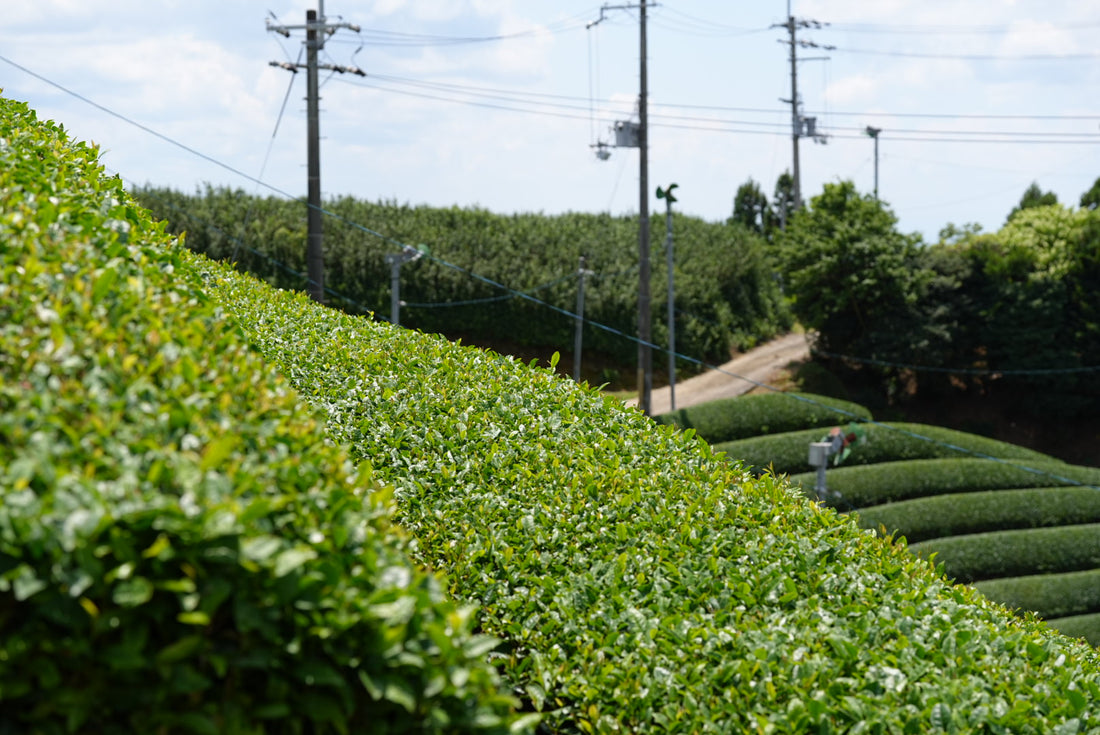
In Japan, the number of tea farmers switching from sencha cultivation to tencha cultivation (the "flake" tea leaves that will then be ground to make matcha) has significantly increased in recent years due to the growing global demand for matcha. Conversely, the production of sencha and other everyday teas is unfortunately in decline. Tencha production requires large quantities of fertilizer.
As a Japanese tea house, we are aware of our mission: to convey the richness, variety, and delicate flavors of Japanese tea, which has been appreciated for centuries. We also think a lot about how to promote Japanese tea in all its diversity. We hope to make our humble contribution to making this wonderful culture more sustainable.
📈 Tencha production
2011: 1,161 t
2022: 3,809 t
Source: National Federation of Tea Producers Associations
📈 Tea production
2007: 94,000 t
2022: 77,000 t
Source: "Crop statistics", Ministry of Agriculture, Forestry and Fisheries

photo: shaded tea plants for tencha production in Wazuka, Kyoto 2023 (c)Nori.K.

photo: our visit to producers in Wazuka, Kyoto 2023
For more info: marutcha(at)posteo.net